
CABLE TIES
Introduction

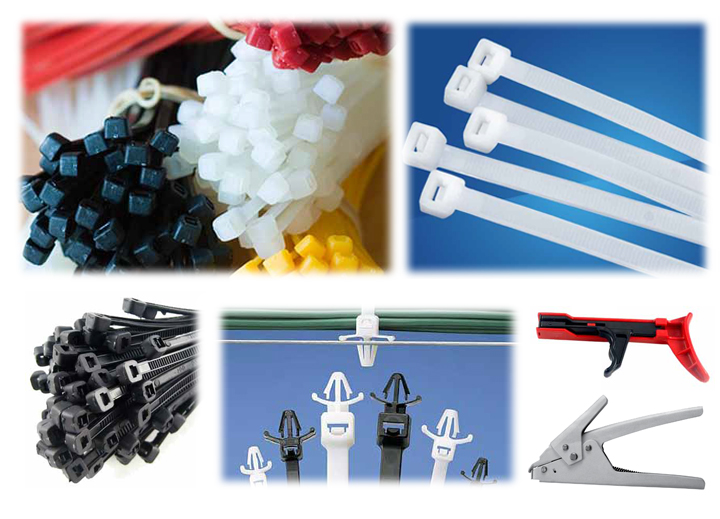 A cable tie (colloquially known as zip tie, zap strap, zip strip, wire tie, mouse belt, tie wrap, quick draw, or rat belt) is a type of fastener,
especially for binding several electronic cables or wires together, and to organize cables and wires. In its most popular form, a cable
tie consists of a sturdy Nylon tape with an integrated gear rack, and on one end a ratchet within a small open case. Once the pointed
tip of the cable tie has been pulled through the case and past the ratchet, it is prevented from being pulled back; the resulting loop
may only be pulled tighter. In two of its most common uses, this allows several cables to be bound together into a cable tree.
Cable
ties were first invented by Thomas & Betts, an electrical company, in 1958 under the brand name Ty-Rap initially designed for airplane
wire harnesses. The original design used a metal ratchet instead of nylon, they later changed to the nylon/plastic design. Cable ties are
generally viewed as single-use devices. However, if a closed loop needs to be opened again, then, rather than destroying the cable tie
by cutting, it may be possible to release the ratchet from the rack to reuse the cable tie. While some cable ties are designed for reuse
with a tab that releases the ratchet, in most cases a sewing needle or similar object (for example a small screwdriver) will need to be
interposed between the ratchet and the rack. To open without cutting it, the ratchet box can be crushed vertically using pliers.